Blog
BlogThe Untold Story of Ponce de León: Florida, the Fountain of Youth, and the Birth of a Legend
Florida is a land of sun-drenched beaches, diverse culture, and captivating history. But long before it became home to world-class hotels like The Elser Hotel & Residences in Downtown Miami, it was the subject of wonder and myth for European explorers. Central to that early fascination was one man: Juan Ponce de León. Often remembered for his alleged quest to find the Fountain of Youth, Ponce de León was in truth a more complex figure. This blog explores his true legacy, from his origins in Spain to his exploration of Florida, debunking myths and uncovering the motivations behind his voyages.
As you walk the vibrant streets of modern Miami or relax in a luxury suite at The Elser Hotel, it’s worth reflecting on the deep historical roots of this land. This is the story of how Florida got its name, what Ponce de León was truly seeking, and how legend and fact became forever intertwined.

Who Was Juan Ponce de León?
Juan Ponce de León was born in 1474 in Santervás de Campos, a small town in Spain. He hailed from a noble but modest family and served as a page in the court of a Spanish knight. This early exposure to military life shaped him into a skilled soldier and tactician, eventually leading him to fight in the final campaigns of the Reconquista.
In 1493, Ponce de León sailed with Christopher Columbus on his second voyage to the New World. Although his role was minor at the time, this journey marked his entry into the Spanish colonial enterprise and opened the door to future leadership in the Caribbean.
The Spanish Caribbean and Rise to Power
After his time in Hispaniola (modern-day Dominican Republic and Haiti), Ponce de León quickly distinguished himself by helping suppress native uprisings. His success earned him land, laborers, and increasing power. In 1508, he was granted a license to explore and colonize the island of San Juan Bautista, now known as Puerto Rico. There, he founded the first Spanish settlement, Caparra, and was appointed its first governor.
Political rivalries soon surfaced, particularly with Diego Colón, the son of Christopher Columbus. Although Colón ultimately succeeded in removing him from office, Ponce de León had already made a name for himself and set his sights on new opportunities.
The Fountain of Youth: Myth or Motivation?
Despite what many schoolbooks and tourist pamphlets suggest, there is no evidence that Ponce de León actually searched for the Fountain of Youth. The myth appears to have emerged posthumously, first mentioned in the writings of Gonzalo Fernández de Oviedo in the 1530s. Scholars believe the tale may have been a political smear to portray him as foolish or gullible.
Instead, his true motivation was more practical: wealth, land, and political power. The Spanish Crown had promised him governorship over any new lands he discovered. Rumors of gold and untapped resources fueled his ambition far more than any mystical spring.
Discovery of Florida: A Mistaken Identity
On March 3, 1513, Ponce de León departed from Puerto Rico with three ships: the Santiago, San Cristobal, and Santa Maria de la Consolacion. After a month at sea, he sighted land on April 2, 1513, near present-day St. Augustine. Believing he had found another large island, he named it "La Florida," inspired by both the Easter season (Pascua Florida) and the lush vegetation that greeted his eyes.
He became the first known European to set foot on what is now the continental United States. His team explored the coastline, sailing as far south as the Florida Keys and attempting to round the peninsula to the Gulf Coast.
Encounters with Native Tribes
Ponce de León’s voyage was met with hostility from Florida’s native populations, including the Calusa. These tribes were not passive inhabitants but fiercely defended their land. Several skirmishes ensued, and the Spanish were often repelled, forcing them to retreat and regroup.
This resistance foreshadowed future conflicts between European colonizers and indigenous peoples throughout the Americas. Although Ponce de León claimed Florida for Spain, he did not establish a permanent settlement on his first voyage.
Return to Spain and Royal Favor
After returning to Puerto Rico and then Spain, Ponce de León was granted the title of Adelantado of Florida by King Ferdinand. This title gave him legal authority to explore, colonize, and govern any new lands he claimed. He also received rights to explore a place called Bimini, rumored to contain the fabled Fountain of Youth.
Though it is unclear whether he truly believed in Bimini's magical spring, it gave his second voyage a romantic twist that captured the imagination of historians and storytellers for centuries.
The Final Expedition and Death
In 1521, Ponce de León launched a colonizing mission with 200 settlers, livestock, and farming equipment. Landing again on Florida's southwest coast, likely near Charlotte Harbor, they attempted to establish a settlement. However, they were once again met with fierce resistance from the Calusa.
During one of these skirmishes, Ponce de León was wounded by a poisoned arrow. The injury forced him to retreat to Havana, Cuba, where he died shortly thereafter in July 1521. He was originally buried in Puerto Rico, where his remains were later interred in the Cathedral of San Juan Bautista.
Why Is Florida Called Florida?
The name "La Florida" was chosen for two reasons:
- Seasonal Timing: Ponce de León sighted land during Easter week, which in Spain is known as "Pascua Florida" (Feast of Flowers).
- Visual Beauty: The landscape appeared lush, filled with wildflowers and dense greenery, justifying the floral name.
Thus, Florida owes its name both to religious tradition and to the natural beauty that continues to define the region today.
Legacy and Cultural Impact
Despite his failures to colonize Florida, Ponce de León remains a pivotal figure in American history. He was among the first Europeans to explore the southeastern U.S., setting the stage for future expeditions and settlements.
His name is immortalized in towns, counties, streets, schools, and even amusement parks. Most famously, the city of St. Augustine capitalized on the Fountain of Youth legend, establishing the Fountain of Youth Archaeological Park — a nod to both history and myth.
Myth vs. Reality: A Quick Comparison

The Elser Hotel: Where History Meets Modern Miami
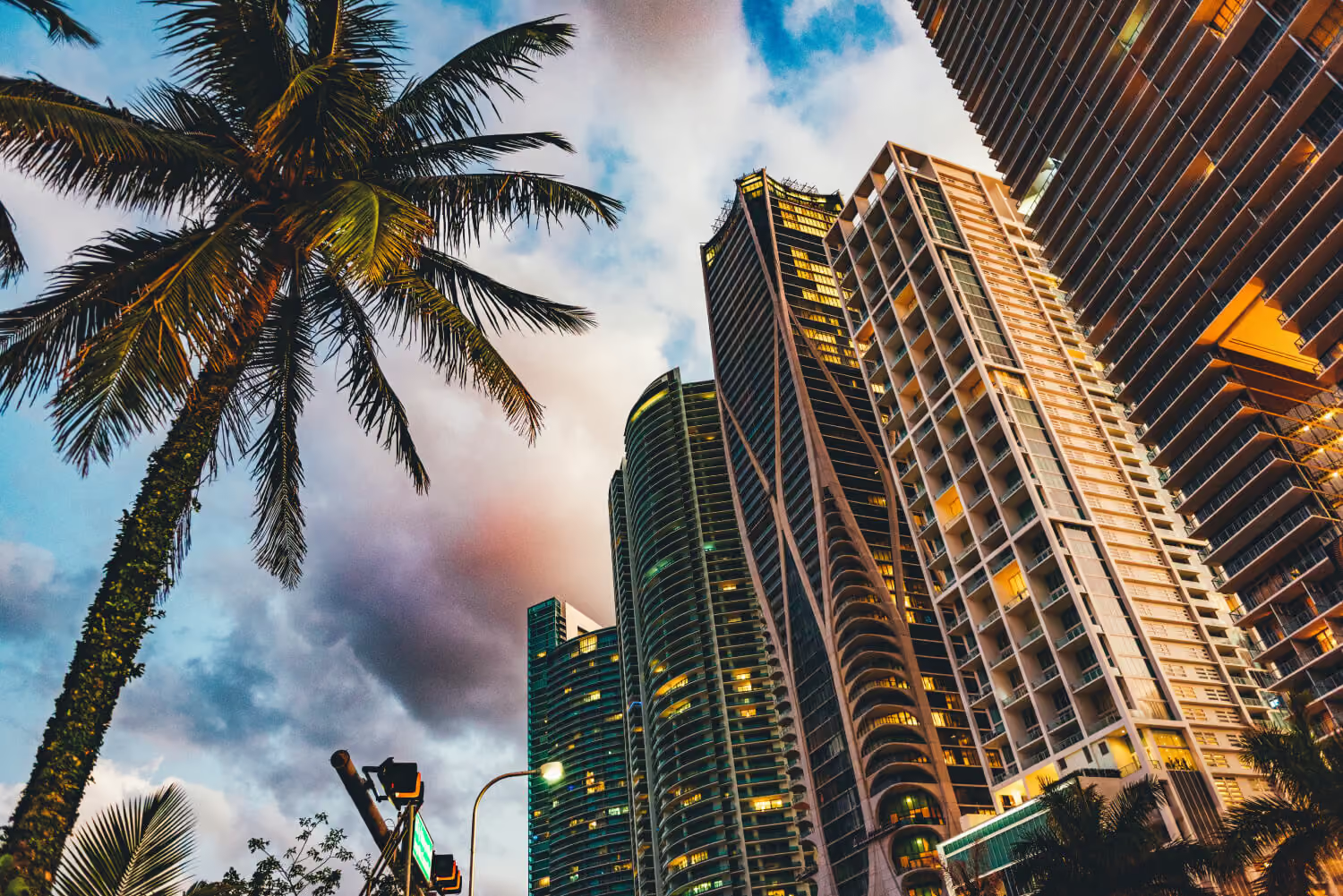
As a traveler in modern-day Miami, you can explore the very lands once glimpsed by Ponce de León more than 500 years ago. Staying at The Elser Hotel & Residences places you in the heart of Downtown Miami, surrounded by history, art, and culture. From your suite’s floor-to-ceiling windows, you can admire Biscayne Bay — the same waters that once carried Ponce de León’s ships.
The Elser is the perfect home base for historical exploration, offering amenities like full kitchens, in-suite washer and dryer, walk-out balconies, and access to an exclusive South Beach Beach Club. Whether you're visiting nearby museums or taking a day trip to St. Augustine, you're walking in the footsteps of history.
Frequently Asked Questions About Ponce de León
Who was Ponce de León? A Spanish explorer and conquistador best known for leading the first official European expedition to Florida.
Did he find the Fountain of Youth? There is no historical evidence that he ever looked for it or believed in it.
What did he name Florida and why? He named it "La Florida" for its floral landscape and the timing of his arrival during the Easter season.
Where did he land in Florida? He first landed near present-day St. Augustine on the east coast.
How did he die? He was wounded by a native tribe and died from the injury in Cuba in 1521.
Conclusion: A Legacy Beyond Legend
Juan Ponce de León was much more than the seeker of a mythical spring. He was a driven leader, an ambitious explorer, and a foundational figure in the early chapters of American history. His expeditions introduced Spain to a new frontier, and his name became forever linked to the land he called Florida.
Today, you can experience the spirit of that discovery by immersing yourself in the cultural and historical fabric of Miami. The Elser Hotel & Residences stands not far from where these tales began, blending modern luxury with the echoes of history. Whether you're chasing myths or simply relaxing under the Florida sun, you're part of a story that began over five centuries ago.





FAQs
What dining options are available at The Elser Hotel?

Does ViceVersa serve breakfast or lunch?
Are there vegetarian, vegan, or gluten-free options?
Other Blogs You May Enjoy


The Remote Worker’s Guide to Miami: Quiet Coffee Shops, Strong Wi-Fi, and the Best Power Lunches
Working remotely from Miami doesn’t mean spending the day staring at your laptop in a hotel room while the pulse of the city carries on outside. Slip into a café for a focused morning, meet with clients over a fantastic lunch, take an afternoon call in the sun, and still be back by Biscayne Bay as soon as quitting time rolls around.
.jpg)
Explore Little Havana: Best of Calle Ocho, Cigars, and Authentic Cafecitos
Little Havana is full of culture, tradition, and charisma, but the best parts aren’t always obvious if you’re just passing through. Calle Ocho is the main route, but knowing where to start makes the whole visit better.

Miami’s Best Beaches: A Guide to Finding Your Perfect Stretch of Sand
Discover the best beaches in Miami, from South Beach to Key Biscayne. The Elser Hotel puts the shoreline minutes away, with exclusive beach club access included.
Connect With Us